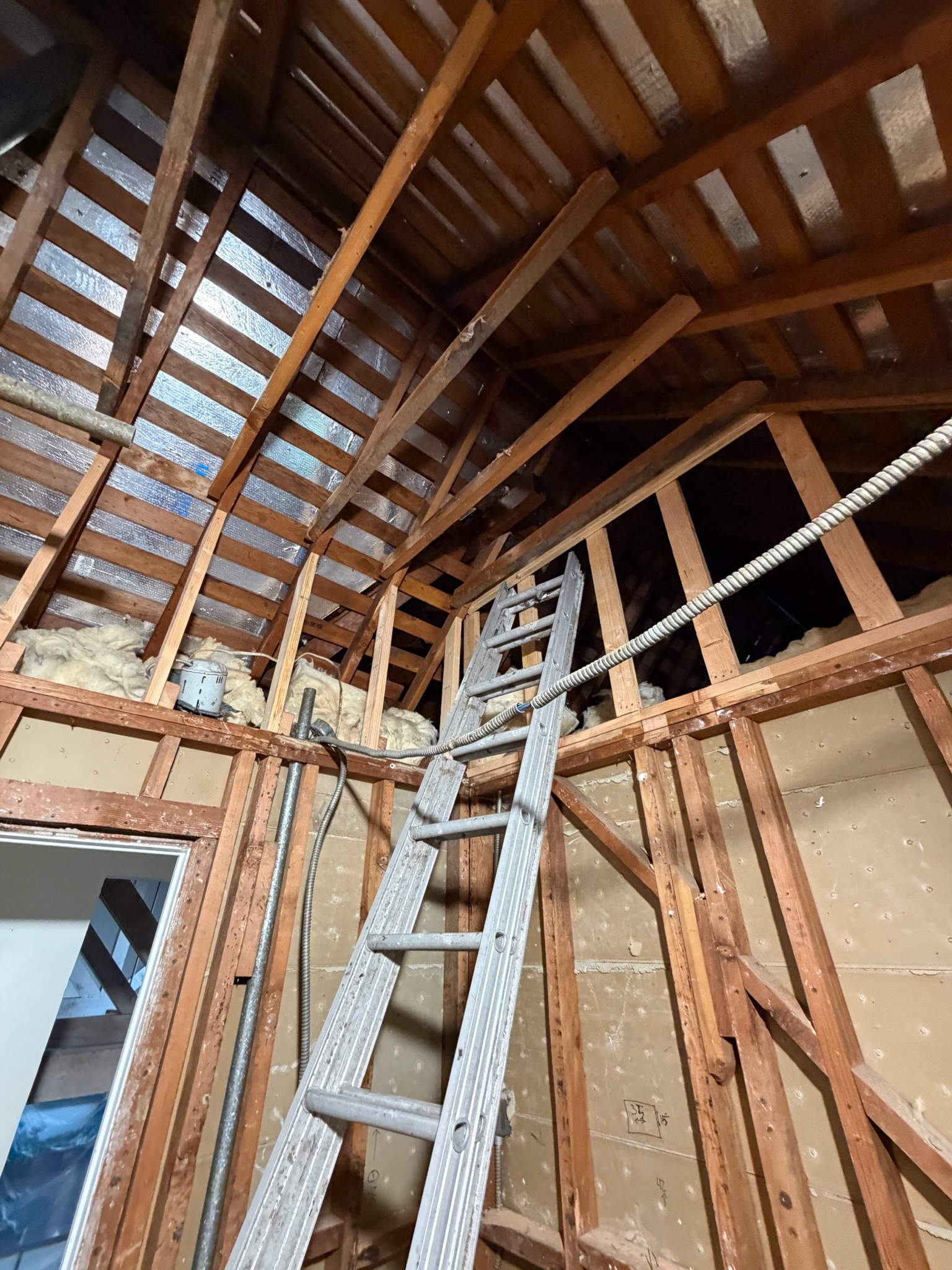
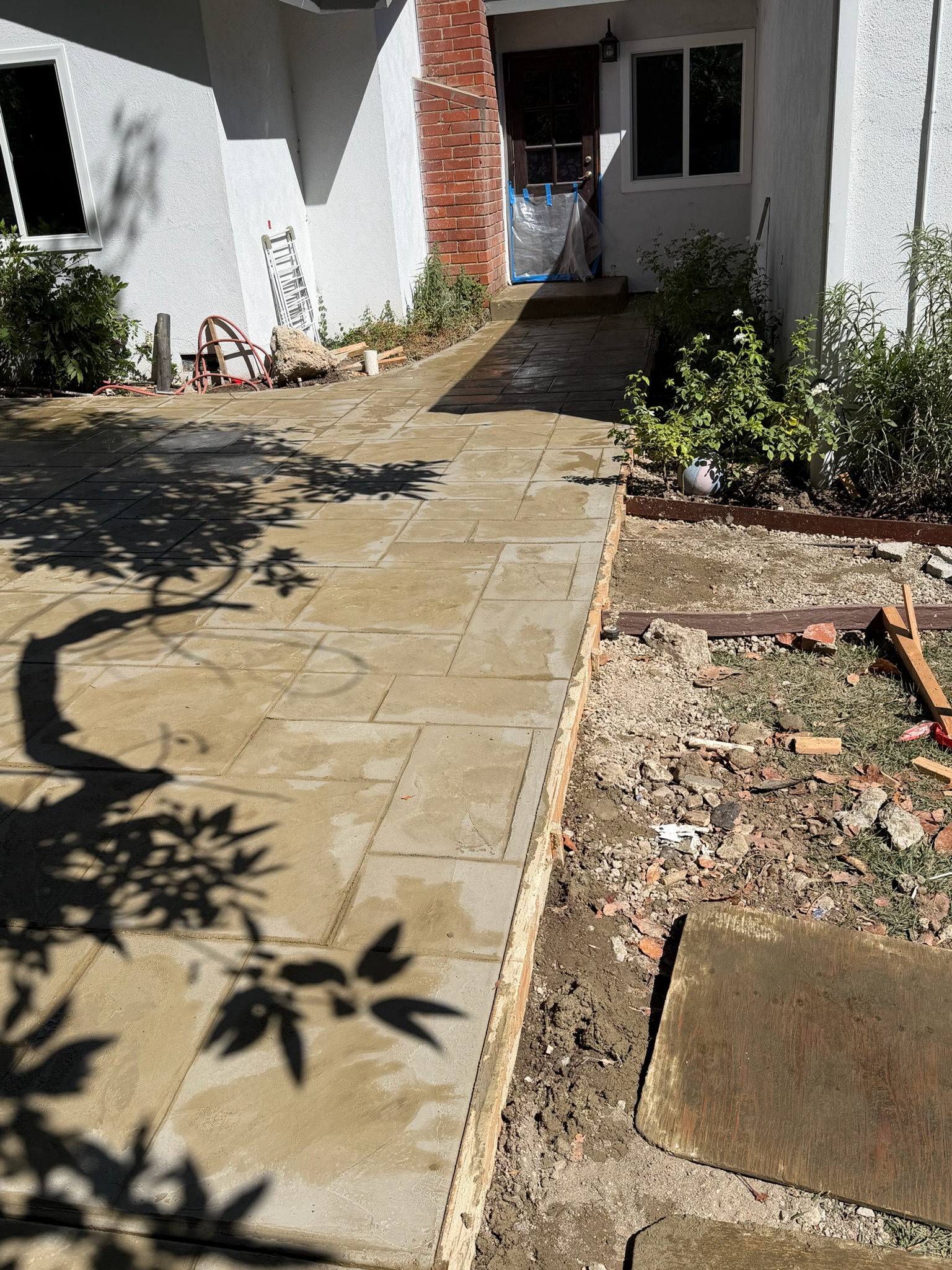
A pool deck is a working surface as much as a visual one. It needs to manage water, heat, foot traffic, transitions, and the relationship between the home and the landscape. Replacing it starts well before the new finish is poured.
Plan the demolition before the equipment arrives
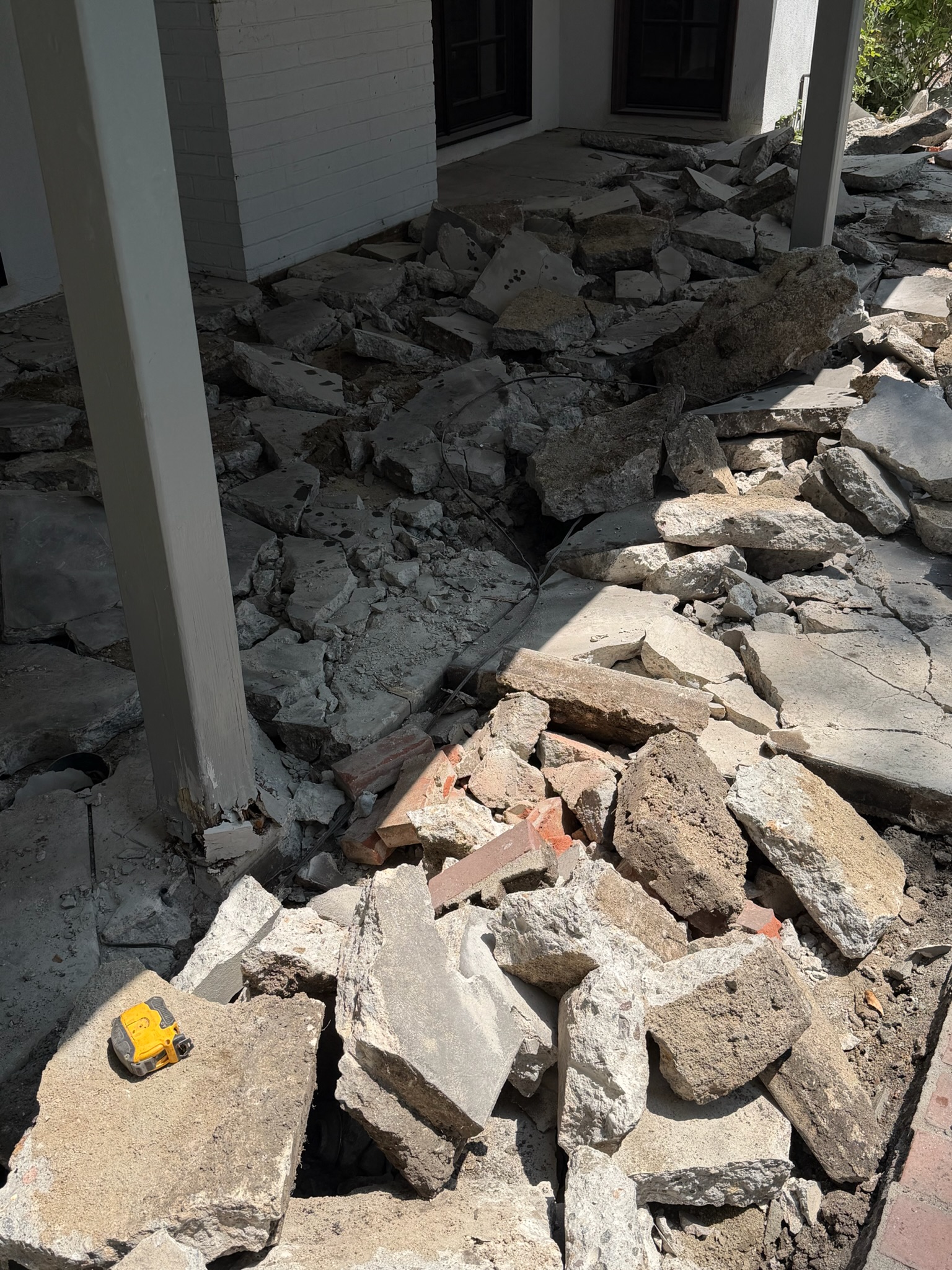
Concrete demolition around a pool requires a deliberate access and protection plan. The team considers how material will leave the site, where equipment can travel, which landscape areas need protection, and how to keep debris away from the pool shell and existing structures.
Existing utilities, irrigation, drainage, door thresholds, and nearby foundations also need to be identified. These conditions help determine how the slab is removed and where careful hand work may be more appropriate than larger equipment.
The base determines how the surface performs
Once the old paving is removed, the subgrade can be evaluated and prepared. Proper compaction, reinforcement, drainage, and slab thickness are essential. A beautiful stamped finish cannot compensate for a poorly prepared base.
Slope is especially important around a pool. Water should move away from the house and toward the intended drains without creating low spots. Transitions at steps, coping, gates, and planting beds are reviewed before the pour so the completed surface feels continuous and intentional.
Pattern and color need full-scale thinking
Stamped concrete has depth, joint lines, and tonal variation. Samples are useful, but the pattern repeat and overall color need to be considered across the full area. The best choice supports the architecture and landscape instead of competing with them.
Control joints and expansion conditions should also be planned as part of the visual layout. When technical requirements and design decisions are coordinated together, the finished pool deck can feel calm, durable, and connected to the home.